The Complete Guide
Mold Remediation in Missouri City, TX — Everything a Homeowner Should Know
Mold is one of the most common and most misunderstood problems in a Gulf Coast home. Missouri City sits in one of the most humid metro areas in the country, and that single fact shapes everything about how mold behaves here. When the outdoor air averages around 74% relative humidity for months at a time, every small moisture event — a window left cracked during a storm, an under-sink drip, a roof flashing that's started to fail — becomes an opportunity for mold to take hold. Understanding how it starts, what professional remediation actually involves, and how to keep it from returning will save you money and protect the people living in the house.
Black Mold Is Real, but the Panic Around It Is Often Misplaced
The phrase “toxic black mold” gets thrown around a lot, and it deserves a clear, calm explanation. The mold people are usually worried about is Stachybotrys chartarum, which appears as dark green to black, often slimy or wet-looking patches on chronically damp cellulose materials — drywall paper, wood, and ceiling tile. It needs sustained moisture to grow, so its presence is a signal that you have a real, ongoing water problem, not just a one-time spill. Stachybotrys is associated with respiratory irritation and allergic responses, particularly for people with asthma, allergies, or weakened immune systems, which is why you should never scrub or disturb a suspected black-mold patch without containment. Disturbing it sends a burst of spores and fragments into the air you breathe.
That said, you can't reliably identify Stachybotrys by color alone — plenty of harmless molds look dark, and some dangerous ones don't. That's the whole reason mold inspection and lab testing exist. What matters for your health and your home is the same regardless of species: contain it, remove it safely, fix the moisture, and verify the air afterward. The remediation framework doesn't change because a lab confirms one genus over another; black mold simply gets stricter PPE and containment because of the spore and mycotoxin exposure risk.
Most of the Mold That Matters Is the Mold You Can't See
Homeowners tend to react to the mold on the bathroom ceiling, but the colonies that cause the most damage are usually hidden — inside wall cavities, under flooring, on the back side of baseboards, in the attic, and beneath the house. This is especially true in Missouri City because of the area's flood history. After Hurricane Harvey and the various lesser flood events since, a great many homes in Riverstone, Lake Olympia, and Quail Valley were dried out with household box fans and a shop vac. That approach pulls the visible water out, but it almost never dries the inside of a wall cavity or the subfloor fast enough to beat the 24-to-48-hour mold window. The result, years later, is a musty smell that won't go away and a family that keeps getting mild respiratory symptoms with no obvious cause. The mold is there; it's just behind the drywall.
Attics are the other major blind spot. Hot, humid air rises and gets trapped against the roof decking, and if the attic ventilation is unbalanced or a roof leak is feeding it, condensation forms and mold grows on the sheathing and rafters. You'll see dark staining on the wood, notice the insulation looks matted or damp, and sometimes spot rust on the tips of roofing nails. Underneath a pier-and-beam home, the same physics play out in reverse: ground moisture and poor airflow let mold colonize the floor joists and subfloor, and the stack effect pulls that musty air up into the living space above. Our water-damage mold remediation service exists specifically for the hidden mold that DIY drying misses.
What Professional Remediation Looks Like, Step by Step
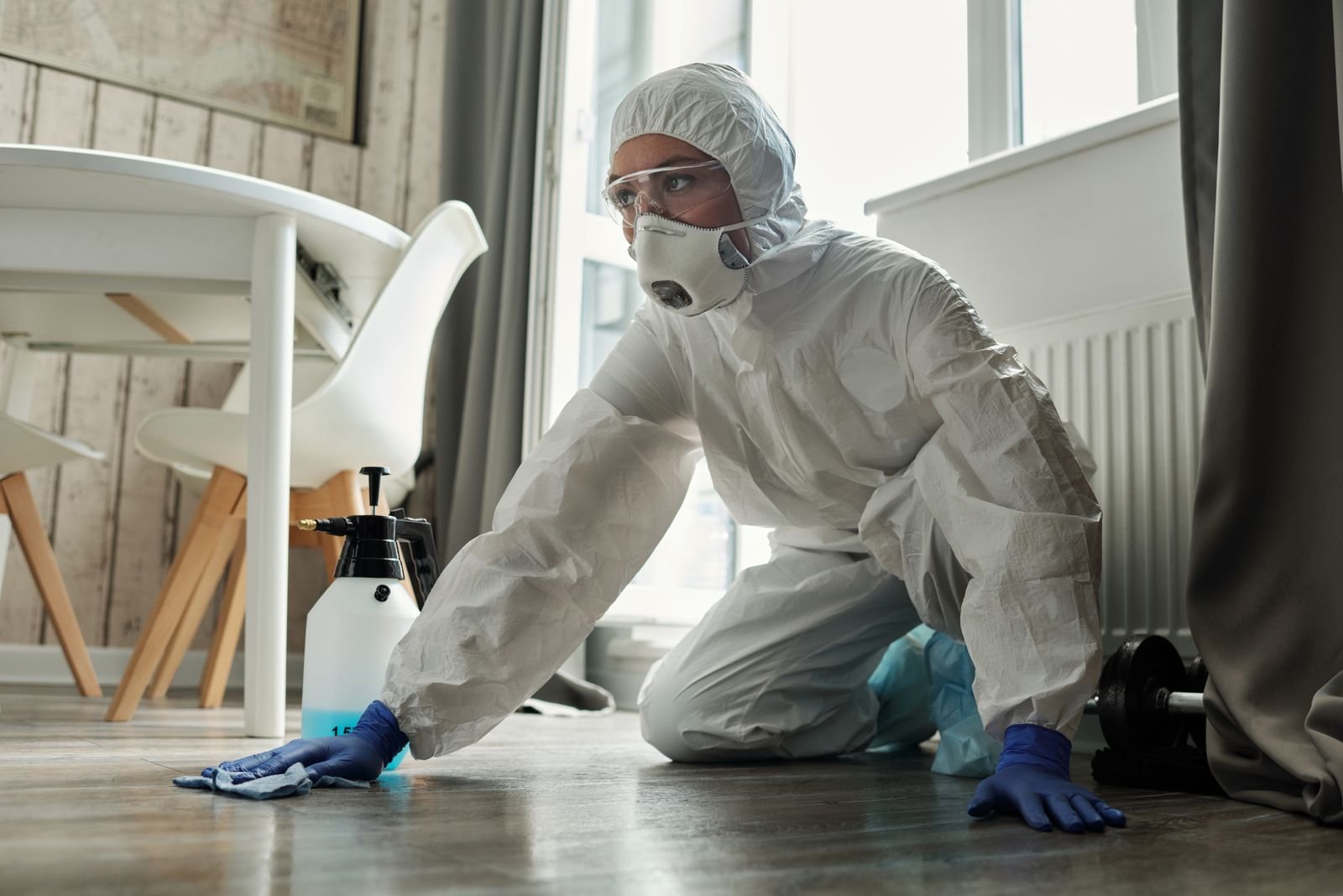
A proper remediation is methodical, and knowing the sequence helps you tell a real contractor from someone who just wants to spray a chemical and leave. First, the source. Nothing else matters if the water keeps coming, so the job begins by finding and stopping the moisture — a leak, a humidity problem, a failed seal. Second, containment. The crew isolates the work area with 6-mil polyethylene sheeting and runs a negative-air machine to hold the space at a slight negative pressure, typically -5 to -10 pascals, so air flows into the containment and not out of it. That machine pulls air through a HEPA filter that captures 99.97% of particles down to 0.3 microns — well below the 4-to-20-micron size of most mold spores.
Third, removal. Porous materials that have been colonized — drywall, insulation, carpet pad — generally can't be cleaned and are removed and bagged. Non-porous materials like framing, tile, and metal can usually be cleaned in place. Fourth, cleaning. Every surface in the containment is HEPA-vacuumed and then wiped down with an antimicrobial, and the air itself is scrubbed. Fifth, drying. The structure is dried back to a normal moisture content using commercial equipment, because residual dampness is an open invitation for the colony to return. Sixth and finally, verification. On a job of any size, you want post-remediation clearance testing — an independent check that the indoor spore levels now match or fall below the outdoor baseline. Only then does the containment come down. For a contained single room, this whole sequence typically takes three to five days; multi-room or structural jobs can run one to three weeks.
Why Local Knowledge Genuinely Changes the Outcome
Mold remediation is not a generic service that works the same in Denver as it does on the Gulf Coast. A remediator who works in Missouri City every day understands the specific drivers here: the relentless ambient humidity, the prevalence of post-flood homes with residual moisture in the cavities, the master-planned-community housing stock built quickly during boom years, and the pier-and-beam foundations common in the older subdivisions. A crew that knows the local building patterns knows where to look first, knows that “we dried it out after the flood” usually means the wall cavities never dried, and knows that an attic in this climate needs balanced ventilation, not just a remediation pass. That experience is the difference between a job that holds and a job that has you calling someone else in eight months.
Choosing a Mold Remediation Contractor — What to Verify
Before you hire anyone, confirm a few things. Make sure they hold the appropriate Texas licensing through the TDLR and that they follow the IICRC S520 standard rather than improvising. Ask how they handle clearance — on a job over 25 square feet, an independent assessor should verify the result, and a contractor who tries to skip that step or grade their own work is a red flag. Ask whether they fix the moisture source or just remove the mold; if the answer is vague, keep looking. Get the scope in writing, and be wary of anyone who quotes a firm price sight-unseen or pressures you toward an enormous tear-out before they've even inspected. Honest remediation removes what's contaminated and no more — over-tearing-out is its own kind of upsell. Our certified team works to all of these standards, and you're welcome to ask us about any of them on the phone.
Keeping Mold Out for Good
Remediation solves the problem you have today; prevention keeps you from paying for it again. Mold growth effectively stops when indoor relative humidity stays below 60%, and the ideal target is 30 to 50%. In a climate like ours, hitting that number usually means running dehumidifiers in the rooms that struggle — bathrooms, laundry rooms, and any space that's felt damp — and watching the number with an inexpensive hygrometer. Dry any spill or leak within 24 to 48 hours, before spores have time to germinate. Keep an eye on the high-risk spots every month: attics, crawl spaces, behind appliances, under sinks, and master bathrooms with weak ventilation. Run the bath and kitchen exhaust fans, make sure the attic is vented properly, and wipe down condensation when you see it. Our full mold prevention guidance walks through each of these in detail.
What to Expect When You Call
When you reach us at (713) 325-6192, you'll talk to a certified specialist, not a call center. Describe what you're seeing — the location, how big it looks, whether there was a recent leak or flood, and whether anyone in the home is having symptoms. We'll give you an honest read on whether it's something you can monitor or something that needs a professional look, and we'll schedule a free inspection to scope the job properly. If remediation is warranted, you'll get a written estimate, clear timeline, and documentation suitable for an insurance claim. There's no high-pressure sales pitch and no charge to talk it through. Mold problems only get more expensive the longer they sit, so the smartest first move is simply to call and find out where you stand.