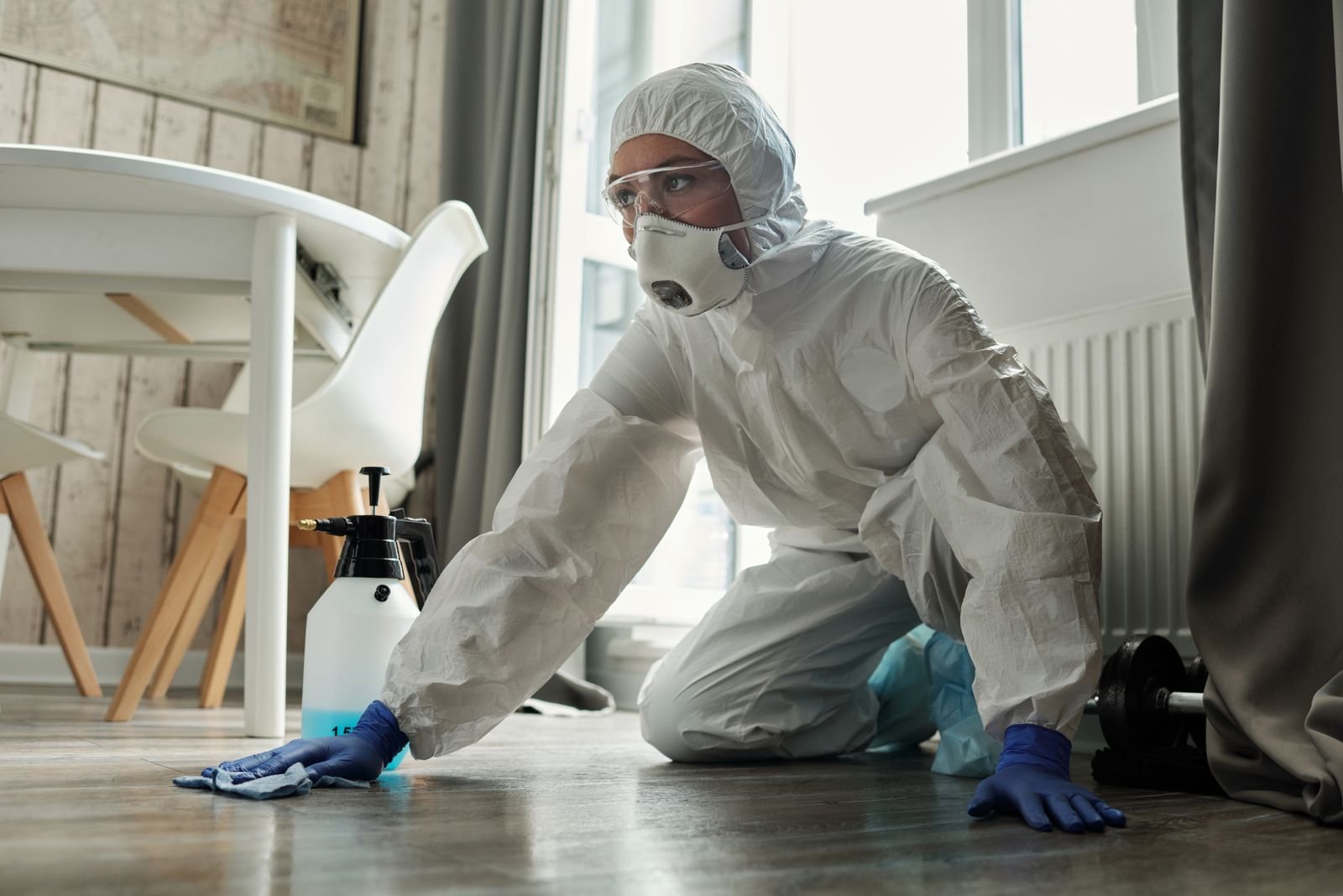
Black Mold Remediation in Missouri City, TX — Stachybotrys Handled the Right Way
Dark, slimy patches on damp drywall are alarming for good reason — they signal a chronic moisture problem. Black mold gets the same IICRC S520 framework as any job, with stricter containment and protective equipment because of the spore and mycotoxin exposure risk. We remove it safely, fix the water, and verify the air. Serving all of 77459 and 77489.
Black Mold Is Real — but the Calm Facts Matter More Than the Panic
The phrase “toxic black mold” gets thrown around a lot, and it deserves a clear, level-headed explanation rather than a scare. The mold people usually mean is Stachybotrys chartarum, which shows up as dark green to black, often slimy or wet-looking patches on chronically damp cellulose materials — drywall paper, wood, and ceiling tile. It needs sustained moisture to grow, which is the single most important thing to understand about it: its presence is a signal that you have a real, ongoing water problem, not a one-time spill that dried on its own.
That distinction shapes everything about how black mold is handled. Because it grows on long-wet materials, finding it means there's a leak, condensation, or humidity that has been feeding it for a while — and that source has to be fixed or the mold simply returns. The remediation framework itself doesn't change because a lab confirms Stachybotrys over another genus; it's the same inspect→contain→remove→clean→dry→verify sequence used for any mold. What changes is the strictness: black mold gets enhanced containment and protective equipment because of the spore and mycotoxin exposure risk. Done properly, it's a manageable problem — the worst outcome comes from disturbing it carelessly or ignoring it.
How Do You Know if It's Black Mold? You Often Can't by Eye Alone
Color is a clue, not a diagnosis. Stachybotrys tends to look dark green-black and wet or slimy, and it favors materials that have stayed damp for a long time — the back of drywall behind a slow leak, wood, ceiling tile. But plenty of harmless molds also look dark, and some concerning ones don't look black at all.
- Look at the moisture history. Black mold needs chronic dampness, so a patch on a wall that's been wet for weeks is a stronger indicator than its color alone.
- Don't rely on color to identify it. The only reliable way to confirm the species is — a lab analyzing a sample under a microscope.
- Treat any suspected black mold cautiously. Until it's confirmed and contained, leave it undisturbed — the safe response is the same regardless of species.
Here's the reassuring part: for your health and your home, the exact genus matters less than you'd think. Whatever the species, the response is identical — contain it, remove it safely, fix the moisture, and verify the air afterward. Testing confirms what it is; the remediation handles it the same way either way.
Ask About Identification
Is Black Mold Dangerous? Why You Should Never Disturb It Yourself
Black mold is associated with respiratory irritation and allergic responses, and the risk is highest for people who are already vulnerable — those with asthma, allergies, or weakened immune systems, along with children and older adults. The symptoms people report tend to be the kind that creep in: a persistent cough, nasal congestion, irritated eyes or throat, headaches, or worsening of an existing respiratory condition. None of that is cause for panic, but it is good reason to take a confirmed colony seriously rather than wiping it down on a weekend.
The most important safety point is this: never scrub, cut into, or otherwise disturb a suspected black-mold patch without containment. Disturbing it releases a burst of spores and fragments into the air you and your family breathe — turning a contained problem on one wall into airborne contamination throughout the home. That's the single biggest mistake homeowners make, and it's why a proper mold removal happens inside a sealed, negative-pressure containment with the crew in protective equipment. If you see something that looks like black mold, the right move is to leave it alone, keep people away from the room, and call a professional to assess it safely.
Why Black Mold Remediation Is More Involved
Same S520 sequence as any job — with stricter containment and protective measures because of the exposure risk.
Enhanced Containment
The work area is sealed with 6-mil polyethylene and held under stronger negative pressure, so spores and mycotoxins released during removal cannot migrate to clean parts of the home.
Upgraded PPE
Technicians wear full personal protective equipment — respirators and protective suits — because the spore and mycotoxin exposure during black-mold removal is higher than for ordinary mold.
HEPA Air Scrubbing
HEPA-filtered air scrubbers run throughout, capturing 99.97% of particles at 0.3 microns to pull airborne spores out of the contained space during and after the removal.
Independent Clearance
After the work, third-party clearance testing verifies the air is back to a normal baseline — an arm's-length check, not the remediator grading their own job.
How Much Does Black Mold Removal Cost — and Why It's Higher
Black-mold remediation generally costs more than an ordinary mold job, and most black-mold projects fall in the range of roughly $2,000 to $10,000 depending on the extent of the growth and how much structure is involved. A contained patch on a single wall sits near the bottom of that band; black mold that has spread across multiple rooms, into a ceiling, or behind cabinetry climbs toward the top. As always, the only honest way to land on a figure for your home is a free estimate after the situation is scoped.
The reason black mold carries a premium comes straight from the protocol. The enhanced containment, the upgraded protective equipment, the additional air scrubbing, and the recommended clearance testing all add labor and materials that a routine removal doesn't require. There's also the moisture factor: because black mold only grows on chronically wet materials, these jobs almost always involve a real water source — a long-running leak or a serious humidity problem — that has to be repaired as part of the work. That source repair, plus any reconstruction afterward, is part of why the range runs higher. Call (816) 371-0136 for a Missouri City–specific estimate, or see our full mold services.
Can You Get Rid of Black Mold for Good? Only by Fixing the Source
Yes — black mold can be eliminated permanently, but only if the work addresses the reason it was there. Because Stachybotrys requires sustained moisture, removing the mold without repairing the water source is a guaranteed repeat. The colony will simply regrow on the same chronically damp material once the new surface goes up. That's why a real black-mold remediation treats the moisture problem as the main event: find the leak, the condensation, or the humidity, fix it, and only then is the removal meaningful. Skipping that step is the most common reason black mold “comes back.”
The other half of getting rid of it for good is proof. After the removal and the source repair, post-remediation clearance testing confirms that indoor spore levels have returned to a normal baseline before the containment comes down. On a job over 25 square feet, Texas rules keep that clearance independent from the remediation, so the verification is genuinely arm's-length. With the source fixed and the air verified, the black mold is gone in a way that holds — not just hidden behind fresh paint. We cover every neighborhood across Missouri City with that source-first, verify-the-result approach.
Black Mold Questions, Answered
A few common questions from Missouri City homeowners — answered straight.
See Something That Looks Like Black Mold?
Don't touch it — disturbing it spreads spores. Tell us what you're seeing and we'll assess it safely, with enhanced containment and a moisture fix that makes it permanent.
(816) 371-0136Black Mold in Your Missouri City Home? Let's Handle It Right.
Enhanced containment, safe removal, a moisture fix, and clearance testing — with a free phone estimate. Talk to a certified specialist now.
(816) 371-0136Call for a Free Estimate